-
by NFA Media ArchiveOctober 11, 2023
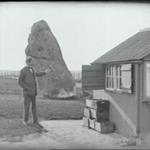
🎬British Pathé – The author Mr H. de Vere Stacpoole visits various British beauty spots including Stonehenge. No title. A car drives down a country lane away from the camera. The car then approaches the camera. Mr Stacpoole - author of "The Blue Lagoon" is out and about visiting British beauty spots. Shot of a country scene. Thatched cottages in Wiltshire. Stonehenge and its refreshment rooms. Shaftesbury and Shaston in Dorset - idyllic country scenes. A horse and cart on a village street, car driving on country lanes, child walking up a very steep hill, "Pine Walk", general views of the countryside. Traditional views of the beautiful British countryside and its picturesque villages. Note: see also "Isle of Delights" EP023. This is Mr H. de Vere Stacpoole
6358 Views
-
by NFA Media ArchiveOctober 11, 2023
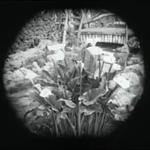
🎬British Pathé – "Main title reads: ""Mr H. de Vere Stacpoole continues his search for homeland beauty spots. (By arrangement with ""Daily Express"")"". Isle of Wight: Mr Stacpoole and a female companion (probably his wife) are seen in their car on a ferry boat. Scenic shots of the Isle of Wight with fancy black masks/frames. Ventnor Pier and views of beautiful gardens with a waterfall. Two women stand on a bridge before the waterfall and wave to the camera. C/U of Lilies. Shot of a sea front promenade. More scenic views of the island."
6119 Views
-
by NFA Media ArchiveOctober 11, 2023
🎬 The New Forest. A film exploring the rich landscape, people and forest traditions in the post war years.
18th century Agisters and pigs with rights to wander are just some of the ancient traditions celebrated in this beguiling look at life in the New Forest. Less familiar sights are captured, too, such as broom making and logging, forestry planting and sailing on the River Beaulieu near Buckler's Hard. No film about the area would be complete, though, without the famous Forest ponies – who are seen here in all their equine glory.
Filmmaker Roy Layzell made many films during this period including other local area films such as Pipelines Under Southampton Water in 1957.
Clifton Parker was a renowned British composer. With nearly 50 feature films under his belt, including The 39 Steps in 1959 and Sink The Bismark in 1960.
John Snagge (OBE) was the voice of the BBC from the war years to his retirement in 1980.
Featuring John Snagge
Music by Clifton Parker
Filmed and Directed by Roy Layzell
Original Cinema Release 1952
The film was commissioned by the Esso Petroleum Company in 1952, just as they were establishing a new refinery on the eastern edge of the New Forest at Fawley, but Forest Heritage is entirely concerned with the natural beauty and traditions of the area: ‘A place out of this modern world where simple pleasures are enough – a miraculous survival of pre-Norman England’.
14767 Views
-

by NFA Media ArchiveOctober 11, 2023
🎬British Pathé – A look at how cattle which roam on the New Forest prairies are rounded up and checked once a year. New Forest, Hampshire. L/S of a red van driving up a leafy road, it passes some cows stood at the side. Various shots of cattle grazing at the side of the road as cars drive past. L/S of several people on horseback rounding the cattle up in a prairie. Various shots as they round the cattle up and herd them up the prairie. L/S as the cattle walk through a stream followed by seven herders. Various shots as the herders on horseback follow the cattle. Various shots of the cattle herded together, M/S as they go into a field. C/U of one of the men on a horse. M/S of the cows crowded together, M/S as they are herded under a tree. M/S as a man approaches one with a pair of clippers, M/S as he clips a bit of hair away from the cow's back. C/U as he brushes it away to reveal the letter 'R' branded on its back. M/S as another man clips a cow, C/U of a young man looking on. M/S of a man putting a rope round a heifer's neck. M/S of a man on horseback. M/S as a heifer is pulled along by the rope
7597 Views
-
by NFA Media ArchiveOctober 11, 2023
🎬 Ytene England's Ancient Forest. An NHU Production for BBC2. Filmed over two years by Manuel Hinge and narrated by John Nettles.
'Ytene' is an ancient name for the area now known as the New Forest. It was the site of the Jutish Kingdom and translates as "Jute", or "of the Jutes". An early Anglo Saxon tribe known to live in the southern parts of Wessex.
Ytene explores the wildlife found in the New Forest in southern England. The woodland, bogs and heaths of the area are home to wild ponies, fallow deer, badgers, foxes, wildfowl, and insects. Seasonal changes are shown, and some elusive species, such as firecrests, hawfinches, woodlarks and tadpole shrimps are pictured.
The programme is interwoven with historical re-enactments and describes the change in land use from mediaeval times.
Filmed and Directed by Manuel Hinge
Music by Martin Kiszko
Film Editor Martin Elsbury
Dubbing Editor Angela Groves
Dubbing Mixer Graham Wild
Unit Manager Christina Hamilton
Production Assistant Elizabeth Toogood
Field Assistant Len Mummery
Sound Recordist Nigel Tucker
Produced by Steve Nicholls
Executive Producer John Sparks
Originally broadcast in The Natural World series 1995
This is the version as aired on BBC in 1995.
Our thanks to The Natural History Unit for supplying the original master.
Film upscaled by New Forest Gateway (Media Archive).
21399 Views
-
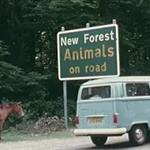
by NFA Media ArchiveOctober 11, 2023
🎬What's New In The Forest. Filmed by members of The Wildlife Society, featuring memorable footage of a working forest, as it was circa 1973.
A brief history to describe the forest, then and now. A look at the various species of deer to be found. The geology. Forest law and the New Forest. Eyeworth Pond, a special place. A look at some of the more unusual Flora. The Forest Lawns and grazing. Common rights. New Forest Pony as a breed. Red Fox on a hillside and beware of Adders in the long grass. Setting up a filming hide on a Bullfinch nest. A pony drift. The Agister's responsibilities. The pressures of traffic filmed and described. Pollution and the proximity of Fawley Refinery. The Forestry Commission management. Timber extraction. Regulation of caravanning and camping. Draining bogs. The pony sales at Beaulieu Road.
Narrated by Tony Askew
Contributors:
Jack Dalley Inkpen, Berkshire
May Dalley Inkpen, Berkshire
Ronald Downham Croydon, Surrey
Angela Hughes Hammoon, Dorset
Violet Maxse West Burton, Sussex
Frances Murphy Hampton, Middlesex
John Murphy Hampton, Middlesex
Peter Nichols Kingston-upon-Thames, Surrey
John Norie Hicliffe, Dorset
David Orr Redgrave, Suffilk
Geoffrey Paulson-Ellis Headley, Hampsire
Jane Paulson-Ellis Headley, Hampsire
John Pitcher Epsom, Surrey
Ricky Pitcher Epsom, Surrey
Jack White ARPS Tifield, Berkshire
Norman Wylie-Moore Heathfield, Sussex
Featured Fauna and Flora:
Adder
Bog Aspendale
Bogbean
Bog Myrtle
Bullfinch
Cattle
Common Frog
Cotton Grass
Damselfly
Donkies
Great Sallow
New Forest Ponies
Orchids
Red Fox
Spierwit
Sundew
Water Crowfoot
Wild Gladiolus
15842 Views
Update Required
To play the media you will need to either update your browser to a recent version or update your
Update Required
To play the media you will need to either update your browser to a recent version or update your

Processing Video - Please Wait!
Update Required
To play the media you will need to either update your browser to a recent version or update your
Processing Video - Please Wait!
Processing Video - Please Wait!
🎬British Pathé – The author Mr H. de Vere Stacpoole visits various British beauty spots including Stonehenge. No title. A car drives down a country lane away from the camera. The car then approaches the camera. Mr Stacpoole - author of "The Blue Lagoon" is out and about visiting British beauty spots. Shot of a country scene. Thatched cottages in Wiltshire. Stonehenge and its refreshment rooms. Shaftesbury and Shaston in Dorset - idyllic country scenes. A horse and cart on a village street, car driving on country lanes, child walking up a very steep hill, "Pine Walk", general views of the countryside. Traditional views of the beautiful British countryside and its picturesque villages. Note: see also "Isle of Delights" EP023. This is Mr H. de Vere Stacpoole
🎬British Pathé – "Main title reads: ""Mr H. de Vere Stacpoole continues his search for homeland beauty spots. (By arrangement with ""Daily Express"")"". Isle of Wight: Mr Stacpoole and a female companion (probably his wife) are seen in their car on a ferry boat. Scenic shots of the Isle of Wight with fancy black masks/frames. Ventnor Pier and views of beautiful gardens with a waterfall. Two women stand on a bridge before the waterfall and wave to the camera. C/U of Lilies. Shot of a sea front promenade. More scenic views of the island."
🎬 The New Forest. A film exploring the rich landscape, people and forest traditions in the post war years.
18th century Agisters and pigs with rights to wander are just some of the ancient traditions celebrated in this beguiling look at life in the New Forest. Less familiar sights are captured, too, such as broom making and logging, forestry planting and sailing on the River Beaulieu near Buckler's Hard. No film about the area would be complete, though, without the famous Forest ponies – who are seen here in all their equine glory.
Filmmaker Roy Layzell made many films during this period including other local area films such as Pipelines Under Southampton Water in 1957.
Clifton Parker was a renowned British composer. With nearly 50 feature films under his belt, including The 39 Steps in 1959 and Sink The Bismark in 1960.
John Snagge (OBE) was the voice of the BBC from the war years to his retirement in 1980.
Featuring John Snagge
Music by Clifton Parker
Filmed and Directed by Roy Layzell
Original Cinema Release 1952
The film was commissioned by the Esso Petroleum Company in 1952, just as they were establishing a new refinery on the eastern edge of the New Forest at Fawley, but Forest Heritage is entirely concerned with the natural beauty and traditions of the area: ‘A place out of this modern world where simple pleasures are enough – a miraculous survival of pre-Norman England’.
🎬British Pathé – A look at how cattle which roam on the New Forest prairies are rounded up and checked once a year. New Forest, Hampshire. L/S of a red van driving up a leafy road, it passes some cows stood at the side. Various shots of cattle grazing at the side of the road as cars drive past. L/S of several people on horseback rounding the cattle up in a prairie. Various shots as they round the cattle up and herd them up the prairie. L/S as the cattle walk through a stream followed by seven herders. Various shots as the herders on horseback follow the cattle. Various shots of the cattle herded together, M/S as they go into a field. C/U of one of the men on a horse. M/S of the cows crowded together, M/S as they are herded under a tree. M/S as a man approaches one with a pair of clippers, M/S as he clips a bit of hair away from the cow's back. C/U as he brushes it away to reveal the letter 'R' branded on its back. M/S as another man clips a cow, C/U of a young man looking on. M/S of a man putting a rope round a heifer's neck. M/S of a man on horseback. M/S as a heifer is pulled along by the rope
🎬 Ytene England's Ancient Forest. An NHU Production for BBC2. Filmed over two years by Manuel Hinge and narrated by John Nettles.
'Ytene' is an ancient name for the area now known as the New Forest. It was the site of the Jutish Kingdom and translates as "Jute", or "of the Jutes". An early Anglo Saxon tribe known to live in the southern parts of Wessex.
Ytene explores the wildlife found in the New Forest in southern England. The woodland, bogs and heaths of the area are home to wild ponies, fallow deer, badgers, foxes, wildfowl, and insects. Seasonal changes are shown, and some elusive species, such as firecrests, hawfinches, woodlarks and tadpole shrimps are pictured.
The programme is interwoven with historical re-enactments and describes the change in land use from mediaeval times.
Filmed and Directed by Manuel Hinge
Music by Martin Kiszko
Film Editor Martin Elsbury
Dubbing Editor Angela Groves
Dubbing Mixer Graham Wild
Unit Manager Christina Hamilton
Production Assistant Elizabeth Toogood
Field Assistant Len Mummery
Sound Recordist Nigel Tucker
Produced by Steve Nicholls
Executive Producer John Sparks
Originally broadcast in The Natural World series 1995
This is the version as aired on BBC in 1995.
Our thanks to The Natural History Unit for supplying the original master.
Film upscaled by New Forest Gateway (Media Archive).
🎬What's New In The Forest. Filmed by members of The Wildlife Society, featuring memorable footage of a working forest, as it was circa 1973.
A brief history to describe the forest, then and now. A look at the various species of deer to be found. The geology. Forest law and the New Forest. Eyeworth Pond, a special place. A look at some of the more unusual Flora. The Forest Lawns and grazing. Common rights. New Forest Pony as a breed. Red Fox on a hillside and beware of Adders in the long grass. Setting up a filming hide on a Bullfinch nest. A pony drift. The Agister's responsibilities. The pressures of traffic filmed and described. Pollution and the proximity of Fawley Refinery. The Forestry Commission management. Timber extraction. Regulation of caravanning and camping. Draining bogs. The pony sales at Beaulieu Road.
Narrated by Tony Askew
Contributors:
Jack Dalley Inkpen, Berkshire
May Dalley Inkpen, Berkshire
Ronald Downham Croydon, Surrey
Angela Hughes Hammoon, Dorset
Violet Maxse West Burton, Sussex
Frances Murphy Hampton, Middlesex
John Murphy Hampton, Middlesex
Peter Nichols Kingston-upon-Thames, Surrey
John Norie Hicliffe, Dorset
David Orr Redgrave, Suffilk
Geoffrey Paulson-Ellis Headley, Hampsire
Jane Paulson-Ellis Headley, Hampsire
John Pitcher Epsom, Surrey
Ricky Pitcher Epsom, Surrey
Jack White ARPS Tifield, Berkshire
Norman Wylie-Moore Heathfield, Sussex
Featured Fauna and Flora:
Adder
Bog Aspendale
Bogbean
Bog Myrtle
Bullfinch
Cattle
Common Frog
Cotton Grass
Damselfly
Donkies
Great Sallow
New Forest Ponies
Orchids
Red Fox
Spierwit
Sundew
Water Crowfoot
Wild Gladiolus